Friday, September 15, 2006


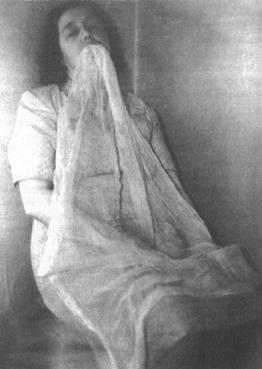
ectoplasm - n - The visible substance believed to emanate from the body of a spiritualistic medium during communication with the dead; am immaterial or ethereal substance, especially the transparent corporeal presence of a spirit or ghost.

I'm back!

Today's word was inspired by Richard Matheson's novel Hell House, which is one of the best ghost stories I've ever read. Highly recommended. (The photograph was taken December, 1948, in total darkness using a Kodak Infrared plate.)

Thursday, September 14, 2006

fanfaronade

fanfaronade - noun - swaggering; empty boasting; blustering manner or behavior; ostentatious display; fanfare

Wednesday, September 13, 2006

explicate

explicate - verb - to explain; to clear of difficulties or obscurity

Tuesday, September 12, 2006

cruciform

cruciform - adj - forming or arranged in a cross

This is popular cathedral design. Basically, the floor plan of the church is laid out in the shape of a cross on the ground. The arms provide small office space, chapels or confessionals. The main body of the church is for the congregation while the head of the building contains the altar and pulpit.

Monday, September 11, 2006

post

post - noun - a strong piece of timber, stone, metal or the like, set upright as a support; a point of attachment; a place for displaying notices, etc; a position in the military as a place of service, such as a fort, base, ship or station

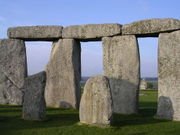
Of course, I'm focusing on the architectural version of this word. Before Roman times, the most common construction type was post-and-lintel, which is basically an upright support surmounted by a horizontal cross-piece on which a roof (for example) was laid. Not all cases of post-and-lintel construction provided for supporting roofs - note one of the oldest examples of this type of construction was at Stonehenge.


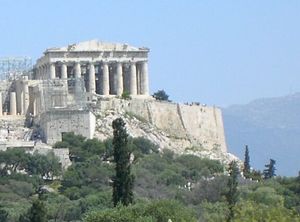
Another well known and extremely widely duplicated is the Parthenon.


If a building could take on human traits, the Parthenon would be the Jesus Christ of buildings. No other building has had as much influence on architecture in all of history since it was constructed. You can't go to any city (nearly anywhere) and look at town halls, courts or other official buildings and not see them built in replica of this ancient Greek building.

Friday, September 08, 2006

basilisk


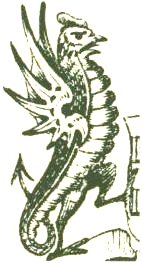
basilisk - n - A (mythical) creature, variously described as serpent, lizard, or deagon, said to kill by its breath or look.

Shakespeare's characters often refer to the basilisk's fatal glance.

vade mecum

vade mecum - noun - a book for ready reference; a manual; a handbook; a useful thing that one regularly carries about

smocking

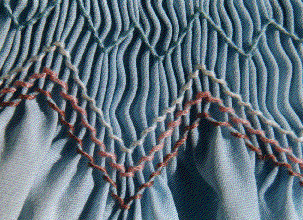
smocking - a decorative embroidery or shirring made by gathering cloth in regularly spaced round tucks

You guys are super lucky! I have chosen my theme for my words and it is...(dun, dun, dun)...SEWING! I'll try and have pictures for everything that I can. This first picture captures smocking pretty well I think. I hope that you can get the whole picture of what it is even though the picture is pretty close up.

Thursday, September 07, 2006

pejorative

pejorative - adj - tending to make or become worse; tending to disparage or belittle

venial

venial - adj. - of a kind that can be remitted, forgiveable, pardonable; meriting no particular censure or notice, excusable

Maybe I need to find a theme with words that I can acutally write something about every day. I'll work on that. I'm boring myself!

wolfjb102070, how's commenting working out for you?

avaunt


avaunt - adv - [archaic] Away; hence.

For example, "Avaunt! Hie thee hence!" might be translated as, "Get out, and be quick about it!" This example also shows why translations of Shakespeare into modern English just don't work. As Robert Frost (1874-1963, shown at left) said, "Poetry is what gets lost in the translation." (Tangent: That's why I recommend E. V. Rieu's prose translation of Homer's Iliad, which may still be available as a Penguin Classics paperback.)

Wednesday, September 06, 2006

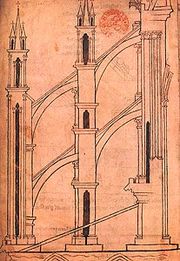
flying buttress


flying buttress - noun - a segmental arch transmitting an outward and downward thrust to a solid buttress that through it's inertia transforms the thrust into a vertical one; an arched masonry support serving to bear thrust, as from a roof or vault, away from a main structure to an outer pier or buttress.


These are the arches which look like ribs on the outside of a building. They are intended to provide extra stability to walls which have high vaulted ceilings or heavy roofs or cupolas on top which happen to cause the walls to drift outward. Remember, gravity works.

prostrate

prostrate - adj. - stretched out with face on the ground in adoration or submission, lying flat; completely overcome and lacking vitality, will, or power to rise; trailing on the ground, procumbent

...just singing Christmas carols this morning for some unknown reason (sigh).

silly


silly - adj - [Archaic] weak; helpless; rustic, plain; homely.

When one of Shakespeare's male characters calls a woman silly, he's not insulting her; in every instance I've seen so far, he's pointing out that she's helpless, incapable of defending herself should a man attack her. Some of his women describe themselves that way.

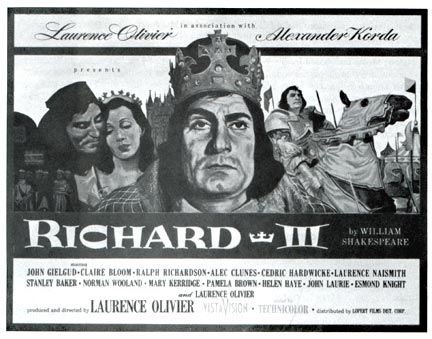
I'm currently reading Richard III, which strikes me as being the best of his early plays. It's the story of one of English history's most fabulous villains, the limping, hunchbacked Richard, Duke of Gloucester (pronounced Gloss-ter), who lies and murders his way to the English crown. It contains two of Shakespeare's most memorable lines, both spoken by Richard. In fact they're the first and last lines Richard speaks:

Now is the winter of our discontent
Made glorious summer by this sun of York. . .

A horse! A horse! My kingdom for a horse!

That second line is so familiar that it's been used by God-only-knows how many comedians: "A horse! A horse! My kingdom for a horse! I haven't had a winner in six months!" (Bada-boom!)

Richard is so inventive, so persuasive, and so enthusiastic in his villainy that you can't wait to see what he'll get away with next. Highly recommended.

Tuesday, September 05, 2006

surcease

surcease - noun - cessation; stop; end

sentient

sentient - adj. - responsive to or conscious of sense impressions; aware; finely sensitive in perception or feeling

wherefore


wherefore - adv - For what purpose or reason; why; therefore.

There was an old saying among Elizabetans, that "For every why there's a wherefore." Actually, it was probably more of a joke, along the lines of "Ask me no questions and I'll tell you no lies."
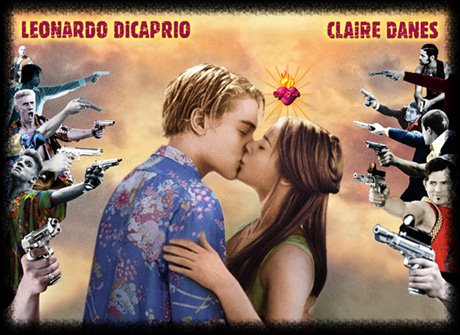
One of Shakespeare's most famous soloquies begins with Juliet asking, "O Romeo, Romeo, wherefore art thou, Romeo?" This is usually misinterpreted as Juliet asking where's Romeo. As a matter of fact, the correct reading is that she's asking why he's named Romeo, what difference would it make if he were named something else. The obvious "hidden" meaning, is that he's a Montague and she's a Capulet, and both families have a long-standing feud. She goes on to ask "What's in a name?" and observes that a rose by any other name would smell as sweet.

Romeo and Juliet was a huge popular success when first performed, and continues to be successful both as pastiche (West Side Story), faithful rendition on film (from Franco Zefirelli), and in a new setting, again on film (with Leonardo DiCaprio and Clare Danes in the title roles).

My own opinion is that Romeo and Juliet is minor Shakespeare, but easy enough to make a good starting poin for those new to his plays.
Friday, September 01, 2006

cupola

cupola - noun - a rounded vault resting on a usually circular base and forming a roof or a ceiling; a small structure built on top of a roof; a vertical cylindrical furnace for melting iron in the foundry that has tuyeres and tapping spouts near the bottom; a raised observation post in the roof of a railroad caboose.

Lots of definitions for this word. We tend to think of this structure as the dome on top of a building. Like the one recently added to our own state capital building. However, this is and interesting structure. The most common form for this structure was originally found on top of St Peter's Basilica in Rome. Domes are particulaly cool to look at, and a fun engineering problem. Well, not so much any more, but Leonardo Da Vinci had some issues with them. If I recall correctly, he was the architect who finished the work on St. Peter's after the original suddenly died. The cupola has one major problem with it - gravity. All that weight tends to push the supporting vaults outward causing the whole thing to fall flat. Try this as an example, cut an orange in half and take out the fruit. Leave the empty half orange on the top of the counter and press gently on the top of the orange. Without support under it, the top just caves in. With the other half, press similarly on it. Supported underneath the "top" of the dome, but the force has to go somewhere, so it goes out the sides (typically). It would be bad form to have the cupola come crashing down on the worshipers below, so the solution to the problem was to find a way to confine the supporting vaults. The answer is five very sturdy chains at various points inside the structure to reinforce the vaults and keep them from sliding outward as gravity takes affect on the whole structure.

irascible

irascible - adj. - marked by hot temper and easily provoked anger

It's funny that y'all were talking about using blogs as a response to reading as opposed to what we're doing because we're all defining words we find in our reading anyway.

Another wonderful word from J.K. Rowling.

excrement

excrement - n - [obsolete] Matter extruded from the body such as hair and nails.

Here's a Shakespearean word that can create problems for a modern reader. When Armado in Love's Labor's Lost talks about handling excrement, he's referring to his mustache.