Wednesday, September 27, 2006
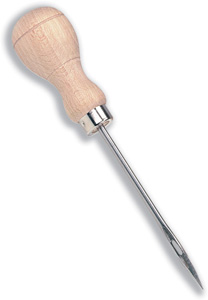
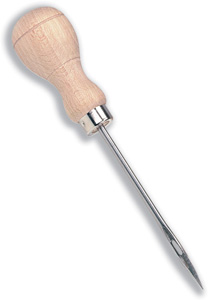
bodkin
bodkin - n. - a sharp slender instrument for making holes in cloth; a blunt needle with a large eye for drawing tape or ribbon through a loop or hem

recusant

recusant - n - One of the Roman Catholics in England who incurred legal and social penalties in the 16th century and afterward for refusing to attend services of the Church of England; A dissenter; A nonconformist.
Very little is known about Shakespeare's life, which has resulted in much speculation. For instance, there is the (mostly) discredited idea that he was a Catholic recusant.
A small but dedicated group believes that Shakespeare didn't write the plays attributed to him. The main candidates for the title of "real" Shakespeare are Francis Bacon and Edward de Vere, 17th Earl of Oxford. A couple of people I respect (Joseph Sobran and Michael Hart) believe Oxford was Shakespeare; Sobran has written a book, Alias Shakespeare, which argues the case for Oxford at some length.
My advice to both of you is, if you plan to attain historical fame, be sure to leave a large paper trail.
Tuesday, September 26, 2006
fulsome
fulsome - adj - offensive to the taste or sensibilities; insincere or excessively lavish; especially offensive from excess praise
satyriasis

satyriasis - n - A syndrome, occurring in males, of excessive preoccupation with sexual gratification or conquest and leading to persistently transient and sometimes exploitative relationships.
Today's word is rated PG-13! You'll notice that bit about "persistently transient and sometimes exploitative relationships," which makes satyriasis a characteristic disorder for our unhappy times. Needless to say - but I'll say it anyway - the antonym is nymphomania, which in spite of Cosmopolitan and other such magazines, is considerably less widespread.
bobbin
bobbin - n. - a cylinder or spindle on which yarn or thread is wound (as in a sewing machine), any of various small round devices on which threads are wound for working handmade lace; a cotton cord formerly used by dressmakers for piping
Bobbin and thread:

Bobbin and thread:

Monday, September 25, 2006
suttee
suttee - n - A Hindu practice whereby a widow immolates herself on the funeral pyre of her husband: now abolished by law.
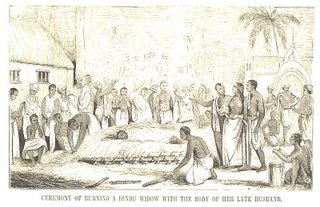 This wicked practice was outlawed by the English. The widow's immolation was supposed to be voluntary, but it's been much debated how great an influence social pressures played in her decision.
It's amazing the extent to which Franz Boaz's cultural relativism has become part of the collective consciousness. Allen Bloom told how his studentss could never bring themselves to condemn suttee; their most common opinion was that the English shouldn't have been there in the first place. I tried Bloom's experiment on a friend. "Were the English right to put a stop to this monstrous practice?" I asked. I'll bet you can guess his answer.
 This wicked practice was outlawed by the English. The widow's immolation was supposed to be voluntary, but it's been much debated how great an influence social pressures played in her decision.
It's amazing the extent to which Franz Boaz's cultural relativism has become part of the collective consciousness. Allen Bloom told how his studentss could never bring themselves to condemn suttee; their most common opinion was that the English shouldn't have been there in the first place. I tried Bloom's experiment on a friend. "Were the English right to put a stop to this monstrous practice?" I asked. I'll bet you can guess his answer.
darn
darn - v. - to mend with interlacing stitches; to embroider by filling with long running or interlacing stitches
Wikipedia is a little more descriptive:
Darning is a sewing technique for repairing holes or worn areas in fabric or knitting with needle and thread alone. It is often done by hand, but it is also possible to darn with a sewing machine. Hand darning employs the darning stitch, a simple running stitch in which the thread is "woven" in rows along the grain of the fabric, with the stitcher reversing direction at the end of each row.
Darning also refers to any of several needlework techniques worked in darning stitches:
Pattern darning is a type of embroidery that uses parallel rows of straight stitches of different lengths to create a geometric design.
Net darning, also called filet lace, is a 19th century technique using stitching on a mesh foundation fabric to imitate lace.
Needle weaving is a drawn thread work embroidery technique that involves darning patterns into barelaid warp or weft threads.
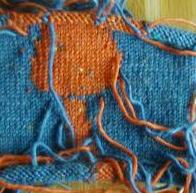
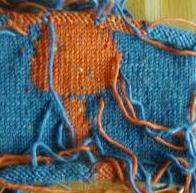
This picture didn't teach me anything, so I included it for a laugh. Apparently, this is a picture of "darning." Let me know if you can figure it out.
Wikipedia is a little more descriptive:
Darning is a sewing technique for repairing holes or worn areas in fabric or knitting with needle and thread alone. It is often done by hand, but it is also possible to darn with a sewing machine. Hand darning employs the darning stitch, a simple running stitch in which the thread is "woven" in rows along the grain of the fabric, with the stitcher reversing direction at the end of each row.
Darning also refers to any of several needlework techniques worked in darning stitches:
Pattern darning is a type of embroidery that uses parallel rows of straight stitches of different lengths to create a geometric design.
Net darning, also called filet lace, is a 19th century technique using stitching on a mesh foundation fabric to imitate lace.
Needle weaving is a drawn thread work embroidery technique that involves darning patterns into barelaid warp or weft threads.
This picture didn't teach me anything, so I included it for a laugh. Apparently, this is a picture of "darning." Let me know if you can figure it out.
Friday, September 22, 2006
shrew

shrew - n - A woman of violent temper and speech.
Guess which Shakespeare play is next on my list? I saw the movie, starring Richard Burton and Elizabeth Taylor, in 1967. Burton in Elizabethan costume brought down the house. (There was a popular misconception that Elizabeth Taylor was just another pretty face. She certainly was pretty, but she was also a first-rate actress, as you can see in such movies as Raintree County, Cat on a Hot Tin Roof (left, with Paul Newman), Suddenly Last Summer, and Who's Afraid of Virginia Woolf?)
Thursday, September 21, 2006
quilt
quilt - v. - to stitch (designs) through layers of cloth; to stitch or sew in layers with padding inbetween
Someday I'm going to make my own quilt...someday.
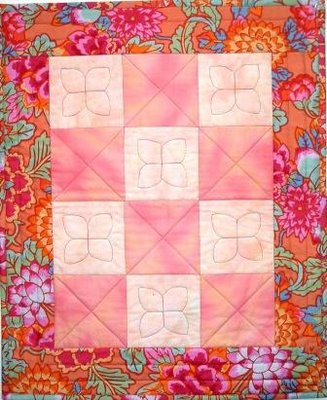
Someday I'm going to make my own quilt...someday.
scientism
scientism - n - The belief that the assumptions, methods of research, etc., of the physical and biological sciences are equally appropriate and essential to all other disciplines, including the humanities and the social sciences.
This plausible but bad idea is the root of many, maybe most, modern evils and is the basis of such black arts as sociology, psychology, and economics.
This plausible but bad idea is the root of many, maybe most, modern evils and is the basis of such black arts as sociology, psychology, and economics.
Wednesday, September 20, 2006
ontology
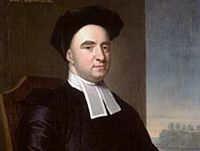
ontology - n - The branch of metaphysics that studies the nature of existence or being as such.
I was - and occasionally still am - deeply interested in philosophical questions. The question ontology deals with is, "What is reality?" Bishop George Berkeley (1685-1753) thought reality was no more than sensual impressions projected on our senses from God's mind, a notion that holds up surprisingly well against attempts at refutation. Ronald Knox wittily summarized Berkeley's thought in two limericks:
There was a young man who said "God
Must think it exceedingly odd
If he finds that this tree
Continues to be
When there's no one about in the Quad."
"Dear Sir, your astonishment's odd;
I am always about in the Quad
And that's why this tree
Will continue to be
Since observed by Yours faithfully, God."
pleat
pleat - noun - a fold in cloth made by doubling the marterial upon itself then pressing or stitching it into place.
This is a technique of gathering a wide amount of cloth into a narrower circumference, most commonly seen in skirts or kilts.
(I think I beat Natalie to this word)
This is a technique of gathering a wide amount of cloth into a narrower circumference, most commonly seen in skirts or kilts.
(I think I beat Natalie to this word
embroidery
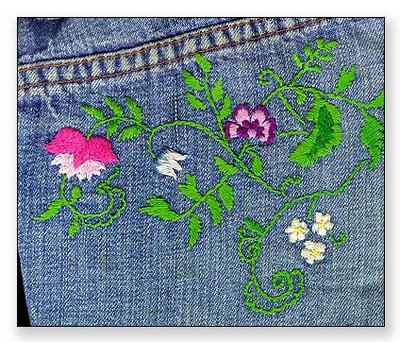
embroidery - n. - the art or process of forming decorative designs with hand or machine needlework; elaboration by use of decorative and often fictitious detail

Tuesday, September 19, 2006
macrame
macrame - noun - an elaborately patterned lace-like webbing made of hand-knotted cord, yarn or the like and used for wall decorations, hanging baskets, garments, accessories, etc; the technique or art of producing such a work.
I have always enjoyed knots. At one point in my life I could name off a couple of dozen knots, show you how to tie them, explain their use as well as the history of the knot. Macrame has been one of those endeavors in the knot world I've never taken to, but have always wanted to try. It seems to be going the way of tatting these days (which I have tried successfully, I might add), you just don't see much of it around any more. Still, I might have to find some time under a rock or something and give this a try. It might be fun.
I have always enjoyed knots. At one point in my life I could name off a couple of dozen knots, show you how to tie them, explain their use as well as the history of the knot. Macrame has been one of those endeavors in the knot world I've never taken to, but have always wanted to try. It seems to be going the way of tatting these days (which I have tried successfully, I might add), you just don't see much of it around any more. Still, I might have to find some time under a rock or something and give this a try. It might be fun.
shirring
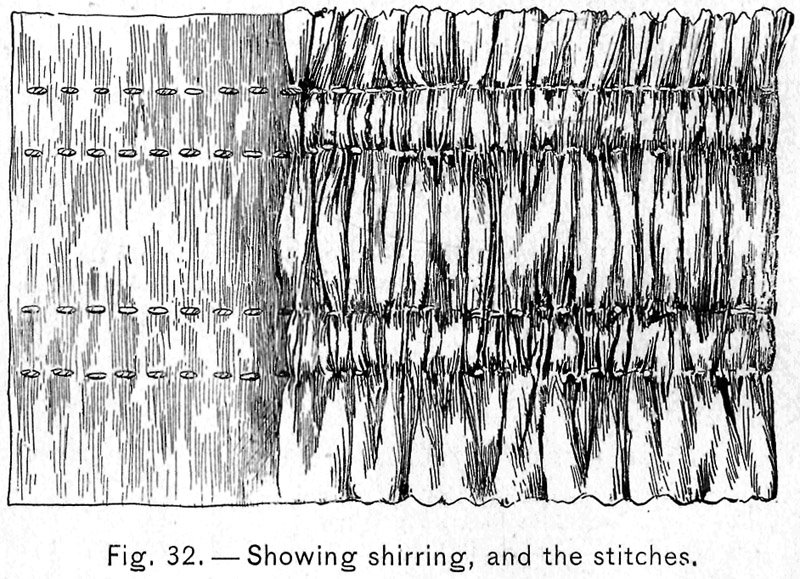
shirring - n. - a decorative gathering (as of cloth) made by drawing up the material along two or more parallel lines of stitching
I'm back, too! I know you were dying to learn more sewing words!
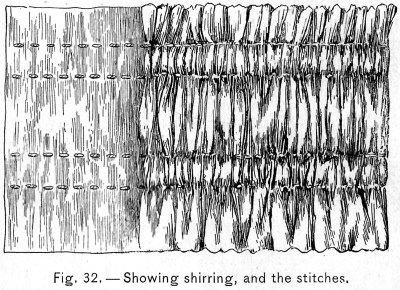
This word is in the definition of my previous word "smocking". I'm guessing that means shirring and smocking are the same thing with two different words to describe it. Here's another picture to help visualize (it's not so pretty but I like that it shows the stitching):
I'm back, too! I know you were dying to learn more sewing words!
This word is in the definition of my previous word "smocking". I'm guessing that means shirring and smocking are the same thing with two different words to describe it. Here's another picture to help visualize (it's not so pretty but I like that it shows the stitching):
Romanesque
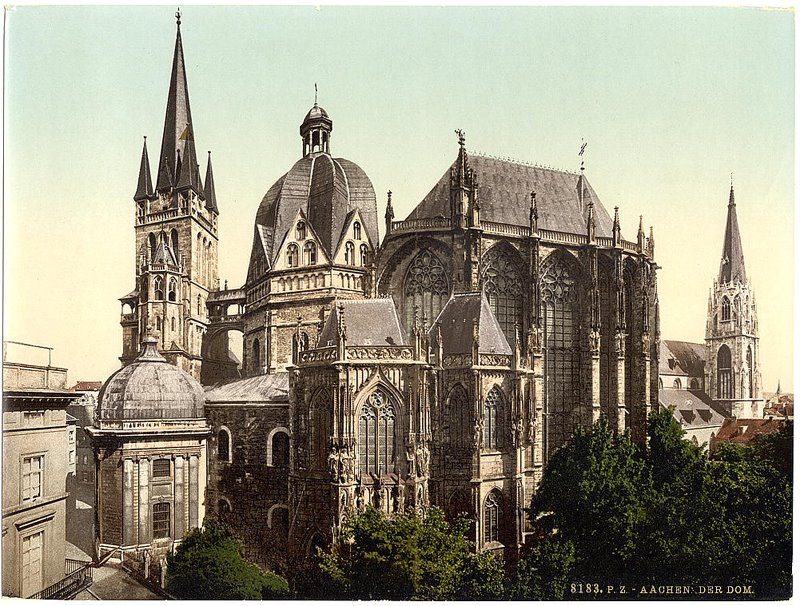
Romanesque - adj - Noting or pertaining to the style of architecture prevailing in western or southern Europe from the 9th through the 12th centuries, characterized by heavy masonry construction with narrow openings, features such as the round arch, the groin vault, and the barrel vault, and the introduction or development of the vaulting rib, the vaulting shaft, and central and western towers for churches.
I can't let Jeff have all the fun, and I've got a personal anecdote bearing on today's word.
I'm not just being nerdish when I emphasize the importance of translation when you select a book originally written in a foreign language. I almost went nuts reading Regine Pernoud's excellent Those Terrible Middle Ages, until I realized that the whole thing made sense once I substituted 'Romanesque' for 'Roman'.
For an example of Romanesque architecture, here's the Cathedrel at Aachen.
Monday, September 18, 2006
recidivism

recidivism - n - Repeated or habitual relapse, as into crime.
A major problem with our legal system is that it leaves convicts few options other than continuing in a life of crime. In theory, a criminal has paid his debt to society once he's finished serving his sentence. Realistically, he's unemployable at any but the most menial jobs, which means he's forced to keep on paying that supposedly discharged debt indefinitely. Is it any surprise that recidivism is so common?
George Bernard Shaw(1856-1950), a Fabian socialist who claimed to be a better playwright than Shakespeare, had an idea that bears closer examination. Shaw recognized the problem I've outlined above and suggested a solution. Suppose a man is convicted of a non-violent crime, something other than rape or murder, e.g., robbing the local Quikki Mart. Shaw suggested releasing the man with a warning and with no public record kept. Suppose our released criminal doesn't take the hint and robs Apu a second time. Release him with a sterner warning and still nothing on the public record. If he falls back a third time, execute him for being an incorrigible criminal. The more I think about it, the more I can't help feeling that this may be the best solution.
Friday, September 15, 2006
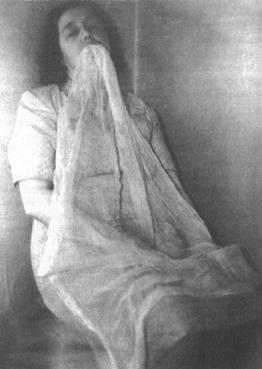
ectoplasm - n - The visible substance believed to emanate from the body of a spiritualistic medium during communication with the dead; am immaterial or ethereal substance, especially the transparent corporeal presence of a spirit or ghost.
I'm back!
Today's word was inspired by Richard Matheson's novel Hell House, which is one of the best ghost stories I've ever read. Highly recommended. (The photograph was taken December, 1948, in total darkness using a Kodak Infrared plate.)
Thursday, September 14, 2006
fanfaronade
fanfaronade - noun - swaggering; empty boasting; blustering manner or behavior; ostentatious display; fanfare
Wednesday, September 13, 2006
Tuesday, September 12, 2006
cruciform
cruciform - adj - forming or arranged in a cross
This is popular cathedral design. Basically, the floor plan of the church is laid out in the shape of a cross on the ground. The arms provide small office space, chapels or confessionals. The main body of the church is for the congregation while the head of the building contains the altar and pulpit.
This is popular cathedral design. Basically, the floor plan of the church is laid out in the shape of a cross on the ground. The arms provide small office space, chapels or confessionals. The main body of the church is for the congregation while the head of the building contains the altar and pulpit.
Monday, September 11, 2006
post
post - noun - a strong piece of timber, stone, metal or the like, set upright as a support; a point of attachment; a place for displaying notices, etc; a position in the military as a place of service, such as a fort, base, ship or station
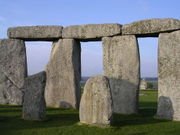
Of course, I'm focusing on the architectural version of this word. Before Roman times, the most common construction type was post-and-lintel, which is basically an upright support surmounted by a horizontal cross-piece on which a roof (for example) was laid. Not all cases of post-and-lintel construction provided for supporting roofs - note one of the oldest examples of this type of construction was at Stonehenge.
Another well known and extremely widely duplicated is the Parthenon.
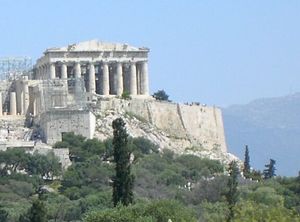
If a building could take on human traits, the Parthenon would be the Jesus Christ of buildings. No other building has had as much influence on architecture in all of history since it was constructed. You can't go to any city (nearly anywhere) and look at town halls, courts or other official buildings and not see them built in replica of this ancient Greek building.
Of course, I'm focusing on the architectural version of this word. Before Roman times, the most common construction type was post-and-lintel, which is basically an upright support surmounted by a horizontal cross-piece on which a roof (for example) was laid. Not all cases of post-and-lintel construction provided for supporting roofs - note one of the oldest examples of this type of construction was at Stonehenge.
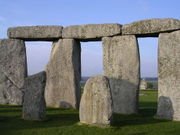
Another well known and extremely widely duplicated is the Parthenon.
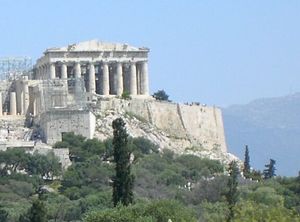
If a building could take on human traits, the Parthenon would be the Jesus Christ of buildings. No other building has had as much influence on architecture in all of history since it was constructed. You can't go to any city (nearly anywhere) and look at town halls, courts or other official buildings and not see them built in replica of this ancient Greek building.
Friday, September 08, 2006
basilisk
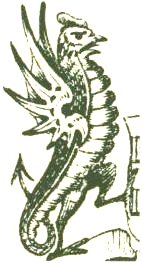
basilisk - n - A (mythical) creature, variously described as serpent, lizard, or deagon, said to kill by its breath or look.
Shakespeare's characters often refer to the basilisk's fatal glance.
vade mecum
vade mecum - noun - a book for ready reference; a manual; a handbook; a useful thing that one regularly carries about
smocking
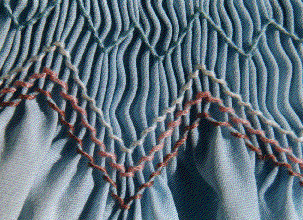
smocking - a decorative embroidery or shirring made by gathering cloth in regularly spaced round tucks
You guys are super lucky! I have chosen my theme for my words and it is...(dun, dun, dun)...SEWING! I'll try and have pictures for everything that I can. This first picture captures smocking pretty well I think. I hope that you can get the whole picture of what it is even though the picture is pretty close up.
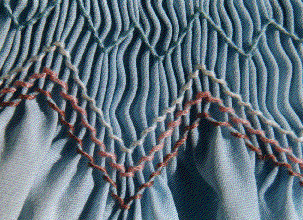
You guys are super lucky! I have chosen my theme for my words and it is...(dun, dun, dun)...SEWING! I'll try and have pictures for everything that I can. This first picture captures smocking pretty well I think. I hope that you can get the whole picture of what it is even though the picture is pretty close up.
Thursday, September 07, 2006
venial
venial - adj. - of a kind that can be remitted, forgiveable, pardonable; meriting no particular censure or notice, excusable
Maybe I need to find a theme with words that I can acutally write something about every day. I'll work on that. I'm boring myself!
wolfjb102070, how's commenting working out for you?
Maybe I need to find a theme with words that I can acutally write something about every day. I'll work on that. I'm boring myself!
wolfjb102070, how's commenting working out for you?
avaunt

avaunt - adv - [archaic] Away; hence.
For example, "Avaunt! Hie thee hence!" might be translated as, "Get out, and be quick about it!" This example also shows why translations of Shakespeare into modern English just don't work. As Robert Frost (1874-1963, shown at left) said, "Poetry is what gets lost in the translation." (Tangent: That's why I recommend E. V. Rieu's prose translation of Homer's Iliad, which may still be available as a Penguin Classics paperback.)
Wednesday, September 06, 2006
flying buttress
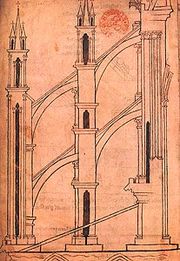
flying buttress - noun - a segmental arch transmitting an outward and downward thrust to a solid buttress that through it's inertia transforms the thrust into a vertical one; an arched masonry support serving to bear thrust, as from a roof or vault, away from a main structure to an outer pier or buttress.
These are the arches which look like ribs on the outside of a building. They are intended to provide extra stability to walls which have high vaulted ceilings or heavy roofs or cupolas on top which happen to cause the walls to drift outward. Remember, gravity works.
prostrate
prostrate - adj. - stretched out with face on the ground in adoration or submission, lying flat; completely overcome and lacking vitality, will, or power to rise; trailing on the ground, procumbent
...just singing Christmas carols this morning for some unknown reason (sigh).
...just singing Christmas carols this morning for some unknown reason (sigh).
silly
silly - adj - [Archaic] weak; helpless; rustic, plain; homely.
When one of Shakespeare's male characters calls a woman silly, he's not insulting her; in every instance I've seen so far, he's pointing out that she's helpless, incapable of defending herself should a man attack her. Some of his women describe themselves that way.
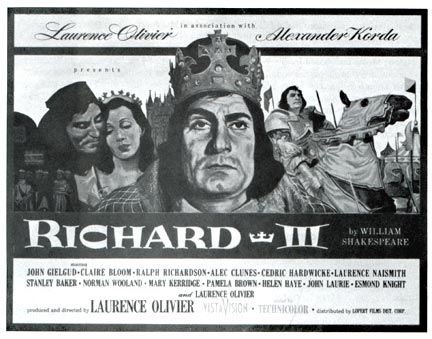
I'm currently reading Richard III, which strikes me as being the best of his early plays. It's the story of one of English history's most fabulous villains, the limping, hunchbacked Richard, Duke of Gloucester (pronounced Gloss-ter), who lies and murders his way to the English crown. It contains two of Shakespeare's most memorable lines, both spoken by Richard. In fact they're the first and last lines Richard speaks:
Now is the winter of our discontent
Made glorious summer by this sun of York. . .
A horse! A horse! My kingdom for a horse!
That second line is so familiar that it's been used by God-only-knows how many comedians: "A horse! A horse! My kingdom for a horse! I haven't had a winner in six months!" (Bada-boom!)
Richard is so inventive, so persuasive, and so enthusiastic in his villainy that you can't wait to see what he'll get away with next. Highly recommended.
Tuesday, September 05, 2006
sentient
sentient - adj. - responsive to or conscious of sense impressions; aware; finely sensitive in perception or feeling
wherefore

wherefore - adv - For what purpose or reason; why; therefore.
There was an old saying among Elizabetans, that "For every why there's a wherefore." Actually, it was probably more of a joke, along the lines of "Ask me no questions and I'll tell you no lies."
One of Shakespeare's most famous soloquies begins with Juliet asking, "O Romeo, Romeo, wherefore art thou, Romeo?" This is usually misinterpreted as Juliet asking where's Romeo. As a matter of fact, the correct reading is that she's asking why he's named Romeo, what difference would it make if he were named something else. The obvious "hidden" meaning, is that he's a Montague and she's a Capulet, and both families have a long-standing feud. She goes on to ask "What's in a name?" and observes that a rose by any other name would smell as sweet.
Romeo and Juliet was a huge popular success when first performed, and continues to be successful both as pastiche (West Side Story), faithful rendition on film (from Franco Zefirelli), and in a new setting, again on film (with Leonardo DiCaprio and Clare Danes in the title roles).
My own opinion is that Romeo and Juliet is minor Shakespeare, but easy enough to make a good starting poin for those new to his plays.
Friday, September 01, 2006
cupola
cupola - noun - a rounded vault resting on a usually circular base and forming a roof or a ceiling; a small structure built on top of a roof; a vertical cylindrical furnace for melting iron in the foundry that has tuyeres and tapping spouts near the bottom; a raised observation post in the roof of a railroad caboose.
Lots of definitions for this word. We tend to think of this structure as the dome on top of a building. Like the one recently added to our own state capital building. However, this is and interesting structure. The most common form for this structure was originally found on top of St Peter's Basilica in Rome. Domes are particulaly cool to look at, and a fun engineering problem. Well, not so much any more, but Leonardo Da Vinci had some issues with them. If I recall correctly, he was the architect who finished the work on St. Peter's after the original suddenly died. The cupola has one major problem with it - gravity. All that weight tends to push the supporting vaults outward causing the whole thing to fall flat. Try this as an example, cut an orange in half and take out the fruit. Leave the empty half orange on the top of the counter and press gently on the top of the orange. Without support under it, the top just caves in. With the other half, press similarly on it. Supported underneath the "top" of the dome, but the force has to go somewhere, so it goes out the sides (typically). It would be bad form to have the cupola come crashing down on the worshipers below, so the solution to the problem was to find a way to confine the supporting vaults. The answer is five very sturdy chains at various points inside the structure to reinforce the vaults and keep them from sliding outward as gravity takes affect on the whole structure.
Lots of definitions for this word. We tend to think of this structure as the dome on top of a building. Like the one recently added to our own state capital building. However, this is and interesting structure. The most common form for this structure was originally found on top of St Peter's Basilica in Rome. Domes are particulaly cool to look at, and a fun engineering problem. Well, not so much any more, but Leonardo Da Vinci had some issues with them. If I recall correctly, he was the architect who finished the work on St. Peter's after the original suddenly died. The cupola has one major problem with it - gravity. All that weight tends to push the supporting vaults outward causing the whole thing to fall flat. Try this as an example, cut an orange in half and take out the fruit. Leave the empty half orange on the top of the counter and press gently on the top of the orange. Without support under it, the top just caves in. With the other half, press similarly on it. Supported underneath the "top" of the dome, but the force has to go somewhere, so it goes out the sides (typically). It would be bad form to have the cupola come crashing down on the worshipers below, so the solution to the problem was to find a way to confine the supporting vaults. The answer is five very sturdy chains at various points inside the structure to reinforce the vaults and keep them from sliding outward as gravity takes affect on the whole structure.
irascible
irascible - adj. - marked by hot temper and easily provoked anger
It's funny that y'all were talking about using blogs as a response to reading as opposed to what we're doing because we're all defining words we find in our reading anyway.
Another wonderful word from J.K. Rowling.
It's funny that y'all were talking about using blogs as a response to reading as opposed to what we're doing because we're all defining words we find in our reading anyway.
Another wonderful word from J.K. Rowling.
excrement
excrement - n - [obsolete] Matter extruded from the body such as hair and nails.
Here's a Shakespearean word that can create problems for a modern reader. When Armado in Love's Labor's Lost talks about handling excrement, he's referring to his mustache.
Here's a Shakespearean word that can create problems for a modern reader. When Armado in Love's Labor's Lost talks about handling excrement, he's referring to his mustache.
Thursday, August 31, 2006
clerestory
clerestory - noun - an outside wall of a room or building that rises above an adjoining roof and contains windows
Probably one of the more important pieces of architecture, thinking primarily of ancient churches, palaces, or other large governemnt buildings is the clerestory (the clear story). This is how a building of vast dimensions was light. Candles just couldn't handle the load. Imagine being in Notre Dame or the Malmesbury Abbey and trying to read your sermon notes, or, if you happened to be lucky enough to be in the orchestra, your music. Buildings without windows are dark buildings indeed and it takes a lot of candles to even raise the light level enough to be tolerable to ambulate sans tripping. Windows and daylight are a much better solution. Then the problem is: how to get light in without blinding the people. The answer: put the windows way up high so the light comes down to the floor of the building without distracting people with a nice view to the outdoors and not having the sunlight full in their eyes as they peer toward the altar.
Probably one of the more important pieces of architecture, thinking primarily of ancient churches, palaces, or other large governemnt buildings is the clerestory (the clear story). This is how a building of vast dimensions was light. Candles just couldn't handle the load. Imagine being in Notre Dame or the Malmesbury Abbey and trying to read your sermon notes, or, if you happened to be lucky enough to be in the orchestra, your music. Buildings without windows are dark buildings indeed and it takes a lot of candles to even raise the light level enough to be tolerable to ambulate sans tripping. Windows and daylight are a much better solution. Then the problem is: how to get light in without blinding the people. The answer: put the windows way up high so the light comes down to the floor of the building without distracting people with a nice view to the outdoors and not having the sunlight full in their eyes as they peer toward the altar.
ambulatory
ambulatory - adj. - moving from place to place, itinerant; able to walk about and not bedridden
It seems like this word would mean the opposite. Maybe I need to do some research and learn suffixes such as "ory." Perhaps if I knew the meaning of "ory" I would not think the definition as backwards. If only people would wisen up and ask me for my opinion before making such importance decisions then things would be so much simpler (and no, I'm not really that arrogant).
It seems like this word would mean the opposite. Maybe I need to do some research and learn suffixes such as "ory." Perhaps if I knew the meaning of "ory" I would not think the definition as backwards. If only people would wisen up and ask me for my opinion before making such importance decisions then things would be so much simpler (and no, I'm not really that arrogant).
churl
churl - n - A rude, boorish, or surly person; a peasant, rustic.
This one shows up in Shakespeare (in the second sense), and it's a useful word to have in your vocabulary.
This one shows up in Shakespeare (in the second sense), and it's a useful word to have in your vocabulary.
Wednesday, August 30, 2006
nave
nave - noun - the hub of a wheel; the main part of the interior of a church, especially the long narrow central hall in the cruciform church that rises higher than the aisles flanking it to form a celestory.
This is the central approach to the altar and is meant to inspire both a feeling of smallness (the ceilings are usually extremely high) and a sense of wonder at the same time. From the entrance of the nave, the altar is usually in plain sight. The nave was the place reserved for the commoners, which, in some way, explains the colloquial use of the word to describe a low-born or unsophisticated person, usually male and usually young (a boy).
This is the central approach to the altar and is meant to inspire both a feeling of smallness (the ceilings are usually extremely high) and a sense of wonder at the same time. From the entrance of the nave, the altar is usually in plain sight. The nave was the place reserved for the commoners, which, in some way, explains the colloquial use of the word to describe a low-born or unsophisticated person, usually male and usually young (a boy).
gramercy
gramercy - interj - Used as an expression of surprise or strong emotion; Thanks (from French grand merci, "great thanks").
In every instance I've seen where Shakespeare uses the word, "Thanks" is meant.
The illustration shows part of Manhatten's pricy Gramercy Park neighborhood.
Tuesday, August 29, 2006
transept
transept - noun - the part of a cruciform church that crosses at right angles to the greatest length between the nave and the apse or choir.
This is usually the north and south portion of the church, as the altar usually lies in the east. The arms of the transept often contain separate chapels . The part of the transept the directly intersects the main aisle is called the crossing, for obvious reasons.
This is usually the north and south portion of the church, as the altar usually lies in the east. The arms of the transept often contain separate chapels . The part of the transept the directly intersects the main aisle is called the crossing, for obvious reasons.
quarto
quarto - n - A book size of 9.5 x 12 inches, determined by folding printed sheets twice to form four leaves or eight pages.
At least 18 of Shakespeare's plays were published in quarto editions during his lifetime. He played no role in their preparation, and he never saw a penny in royalties, which seems incredible to those who live in a time when Stephen King, Dan Brown, and John Gresham could live lives of luxury on their royalties.
The folios create a problem for Shakespeare scholars; in fact, they're probably the main reason there are Shakespeare scholars in the first place. For example, Juliet's balcony soliloquy is available in two quarto editions and the First Folio. All three versions differ slightly, which gives rise to the question, "What did Shakespeare actually write?" Moreover, these plays were scripts for actors, so there's the next question, "What was finally recited on stage?" This is probably yet another never-ending story.
At least 18 of Shakespeare's plays were published in quarto editions during his lifetime. He played no role in their preparation, and he never saw a penny in royalties, which seems incredible to those who live in a time when Stephen King, Dan Brown, and John Gresham could live lives of luxury on their royalties.
The folios create a problem for Shakespeare scholars; in fact, they're probably the main reason there are Shakespeare scholars in the first place. For example, Juliet's balcony soliloquy is available in two quarto editions and the First Folio. All three versions differ slightly, which gives rise to the question, "What did Shakespeare actually write?" Moreover, these plays were scripts for actors, so there's the next question, "What was finally recited on stage?" This is probably yet another never-ending story.
Monday, August 28, 2006
apse
apse - noun - a projecting part of a building (as a church) that is usually semicircular in plan and vaulted.
Apse is NOT a groupe of Apes! Just thought I'd point that out. Anyway, this architecutral structure was a common method of holding up the roof on the end of a building, or, less frequently, both ends. The fetish with round vaulted roof structures was more one of function, the vaults all supported each other, and the roundness created a feeling of being open. They also let in more light more uniformly than the vaults down the length of the aisle of the building.
Apse is NOT a groupe of Apes! Just thought I'd point that out. Anyway, this architecutral structure was a common method of holding up the roof on the end of a building, or, less frequently, both ends. The fetish with round vaulted roof structures was more one of function, the vaults all supported each other, and the roundness created a feeling of being open. They also let in more light more uniformly than the vaults down the length of the aisle of the building.
squib
squib - n. - a short humorous or satiric writing or speech, a short news item; a small firecracker in which the powder burns with a fizz; a small electric or pyrotechnic device used to ignite a charge
Another fun Harry Potter word. I've been surprised when looking things up that she (J.K. Rowling) uses in her books because even though they sound bizarre a lot of her ideas are based on real things. This one, however, is not. A squib in her books is someone born of magical parents but doesn't have any magicial abilities of their own.
Sorry I disappeared for a short while. I'm back.
Another fun Harry Potter word. I've been surprised when looking things up that she (J.K. Rowling) uses in her books because even though they sound bizarre a lot of her ideas are based on real things. This one, however, is not. A squib in her books is someone born of magical parents but doesn't have any magicial abilities of their own.
Sorry I disappeared for a short while. I'm back.
marry

marry - interj - Short form of "By the Virgin Mary." A mild oath, used as an exclamation of surprise or emphasis.
"Marry, will Kavanagh's Shakespeare obsession never cease?"
I've just finished reading for the second time Shakespeare's most despised play, Titus Andronicus. You remember splatter movies; well TA is a splatter play.
A reasonable guess for Shakespeare's source might be the Greek legend of Tereus, Procne, and Philomela, as recounted in Ovid's (Publius Ovidius Naso) Metamorposes. Tereus took a shine to his wife Procne's sister Philomela, raped Philomela, and, to conceal his crime, cut out her tongue and moved her in with the rest of his slaves. The resourceful Philomela wove a tapestry in which she identified her molester. When Procne saw the tapestry, she murdered her and Tereus's son, Itys, and fed her husband some choice cuts taken from the body. This legend seems almost restrained compared to what Shakespeare did with it. I don't know how much Shakespeare you've read, Natalie, but I'd hold off on this one for a while. (By the way, have either of you seen the movie version from a few years back with Anthony Hopkins as Titus?)
(The illustration reproduces - badly - Peter Paul Rubens's painting of Procne confronting Tereus with their son's head.)
Friday, August 25, 2006
basilica
basilica - noun - an oblong building ending in a semicircular apse used in ancient Rome especially for a court of justice and place of public assembly; an early Christian church building consisting of nave and aisles with clerestory and a large high transept from which an apse projects.
A fascinating structure to say the least. Especially how they were constructed. Creating one of these vaulted buildings was no mean feat in ancient Rome, yet we see them all over the place. They were quite the fad thing to do in ancient architecture.
A fascinating structure to say the least. Especially how they were constructed. Creating one of these vaulted buildings was no mean feat in ancient Rome, yet we see them all over the place. They were quite the fad thing to do in ancient architecture.
folio

folio - n - A large sheet of paper folded once to make two leaves, or four pages, of a book or manuscript; a volume having pages of the largest size (about 15 inches), formerly made from such a sheet.
Many of Shakespeare's plays were published in smaller (quarto) editions during his lifetime, but these were what today would be considered pirated editions. Moreover, Shakespeare did not have any say in these publications, so their quality is erratic to say the least. His complete plays were first published in 1623, in what is now known as the First Folio; others were to follow. These different editions are why there were - and still are - Shakespeare scholars; the burning question continues to be, "What did Shakespeare actually write, and what was finally performed. To give just one example out of many possible, there's a soliloquy in Hamlet that begins, "Oh, that this too too solid flesh would melt. . ." One edition I've seen renders that as, "Oh, that this too too sullied flesh would melt. . ." The story continues, offering yet another proof that Shakespeare was not just for his time, but for the ages.
Thursday, August 24, 2006
recusant
recusant - n - Refusing to submit, comply, etc.; obstinate in refusal; refusing to attend services in the Church of England.
Virtually nothing is known of Shakespeare's early life. There's a baptismal record, bans posted for his marriage to Anne Hathaway, birth records for three children (Susanna and the twins Hamnet and Judith), and little but rumor until his name pops up in London in 1592 (There's substantial evidence that he'd already been there for a few years though). Today's word comes up because there is a generally discredited notion that he may have been a recusant Catholic.
Virtually nothing is known of Shakespeare's early life. There's a baptismal record, bans posted for his marriage to Anne Hathaway, birth records for three children (Susanna and the twins Hamnet and Judith), and little but rumor until his name pops up in London in 1592 (There's substantial evidence that he'd already been there for a few years though). Today's word comes up because there is a generally discredited notion that he may have been a recusant Catholic.
Wednesday, August 23, 2006
swamped
swamped - adj - sunk by being filled with water; rendered powerless, especially by an excessive amount or profusion of something
broil
broil - n - A rowdy argument; a brawl.
Here's another entry in my Shakespeare glossary. Think of Montagues and Capulets in the sunny streets of Verona, or Plug Uglies and Bowery Boys in the grimy streets of New York City.
Aside to Jeff and Natalie: Am I here all alone? I've been talking to myself for years, but I'd really welcome hearing from the rest of our small, select circle.
Here's another entry in my Shakespeare glossary. Think of Montagues and Capulets in the sunny streets of Verona, or Plug Uglies and Bowery Boys in the grimy streets of New York City.
Aside to Jeff and Natalie: Am I here all alone? I've been talking to myself for years, but I'd really welcome hearing from the rest of our small, select circle.
Tuesday, August 22, 2006
archaic
archaic - adj - Of, relating to, or characteristic of a much earlier, often more primitive period, especially one that develops into a classic stage of civilization.
I'm still plugging Shakespeare.
One of the obstacles to a modern reader's enjoyment of Shakespeare is his language, which is generously peppered with obsolete or archaic words. For an example of the former, there's "sirrah," which I used yesterday. For an example of the latter, there's "fond," which in Shakespeare's time meant "foolish." That's why most editions of his works are heavily footnoted. It's hard to enjoy a play when you must constantly be glancing at the bottom of a page (or a facing page) to get a definition, but there's a simple solution: read more Shakespeare, and you'll find yourself growing accustomed to his Elizabethan English. How say you?
I'm still plugging Shakespeare.
One of the obstacles to a modern reader's enjoyment of Shakespeare is his language, which is generously peppered with obsolete or archaic words. For an example of the former, there's "sirrah," which I used yesterday. For an example of the latter, there's "fond," which in Shakespeare's time meant "foolish." That's why most editions of his works are heavily footnoted. It's hard to enjoy a play when you must constantly be glancing at the bottom of a page (or a facing page) to get a definition, but there's a simple solution: read more Shakespeare, and you'll find yourself growing accustomed to his Elizabethan English. How say you?
Monday, August 21, 2006
sirrah
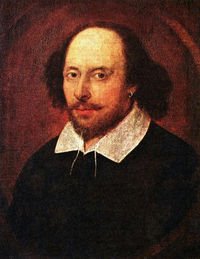
sirrah - n - Formerly a contemptuous term of address to a man or boy; often used in anger.
And often used by Shakespeare's characters.
Inspired by Jeff, I have begun reading - or rereading - William Shakespeare's (1562-1614) complete works. I'm working my way from earliest to latest plays, after which I'll dive into the sonnets and poems.
It's not clear in most cases when exactly Shakespeare wrote a given play, but the best educated guesses indicate the first were The Comedy of Errors, Love's Labors Lost, and 2 Henry VI, so I started with 1 Henry VI, and will continue with the second and third parts before moving on to the early comedies.
Jeff, you once suggested a readers blog. Would Shakespeare be suitable?
Friday, August 18, 2006
inane

inane - adj - Lacking sense or substance.
Like this guy here.
I'll admit I laugh at the latest Bushisms, but I also cringe when I hear him speak. Bush had hardly begun his first term when some wit correctly stated that "It's sad when the President of France and the King of Jordan speak better English than the President of the United States." To what do we attribute this disorder? It's not lack of brainpower. Steve Sailer has persuasively argued that Bush's IQ is in the neighborhood of 125. He has also argued, equally persuasively, that Bush is the most intellectually lazy man ever to occupy the White House.
Wednesday, August 16, 2006
chiliasm
chiliasm - n - The doctrine stating that Jesus will reign on Earth for 1,000 years.
Are either of you chiliasts? It's not part of my theology, but I'd be interested in gaining some insight into this belief.
Are either of you chiliasts? It's not part of my theology, but I'd be interested in gaining some insight into this belief.
Tuesday, August 15, 2006
arrogate
arrogate - verb - to claim or seize without right or justification; to appropriate; to claim on behalf of another; to ascribe
This raises the question about Jacob, did he arrogate Esau's blessing? My take is yes.
This raises the question about Jacob, did he arrogate Esau's blessing? My take is yes.
geocentric
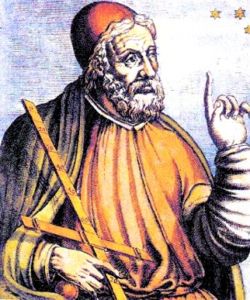
geocentric - adj - Relating to, measured from, or with respect to the center of the earth; Having the Earth as a center.
The solar system and the "fixed stars" were believed to orbit geocentrically, meaning that they revolved around the Earth. The main proponent of this view was Ptolemy (Claudius Ptolemaius) of Alexandria (c. 90 - c. 168, see illustration), who expounded on the geocentric theory in his Almagest, one of the greatest intellectual works in history - it's only failing being that it's wrong. Polish canon Nicolaus Copernicus (1473-1543) was the first to put forth the heliocentric theory, viz., that the Earth and other planets revolved around the sun in his book De Revolutionis Orbium Coelestium (On the Revolutions of the Heavenly Bodies). That was a step in the right direction, but Copernicus and later Galileo Galilei (1564-1642) believed that the planetary orbits were circular. It was Johannes Kepler (1571-1630) who finally demonstrated that the orbits were elliptical.
Monday, August 14, 2006
eremite
eremite - noun - a hermit, especially a religious recluse
I'll defer to John to discuss this word. For what ever reason though, this word is too close to termite for me not to have some humorous moments with it.
I'll defer to John to discuss this word. For what ever reason though, this word is too close to termite for me not to have some humorous moments with it.
licentious
licentious - adj - Lacking moral discipline or ignoring logal restraint, especially in sexual conduct.
What can I possibly say? Except maybe that "If it feels good, do it" will always be an easier sell than Samuel Johnson's "He who makes an animal of himself loses only the pain of being a man."
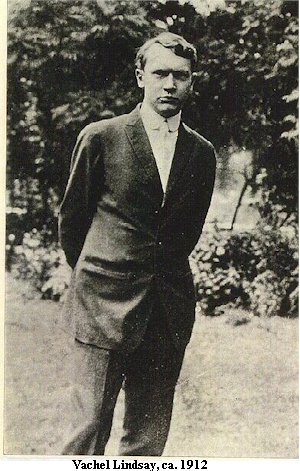
And now for another of Johnny Kavanagh's favorite poems! This one's by Vachel Lindsay (1879-1931); it's called General William Booth Enters Into Heaven. I'd have preferred to use The Congo, but my nerve failed me.
(NB: Lindsay's poems are meant to be performed.)
General William Booth Enters into Heaven
[To be sung to the tune of The Blood of the Lamb with indicated instrument]
I
[Bass drum beaten loudly.]
Booth led boldly with his big bass drum --
(Are you washed in the blood of the Lamb?)
The Saints smiled gravely and they said: "He's come."
(Are you washed in the blood of the Lamb?)
Walking lepers followed, rank on rank,
Lurching bravoes from the ditches dank,
Drabs from the alleyways and drug fiends pale --
Minds still passion-ridden, soul-powers frail: --
Vermin-eaten saints with mouldy breath,
Unwashed legions with the ways of Death --
(Are you washed in the blood of the Lamb?)
[Banjos.]
Every slum had sent its half-a-score
The round world over. (Booth had groaned for more.)
Every banner that the wide world flies
Bloomed with glory and transcendent dyes.
Big-voiced lasses made their banjos bang,
Tranced, fanatical they shrieked and sang: --
"Are you washed in the blood of the Lamb?"
Hallelujah! It was queer to see
Bull-necked convicts with that land make free.
Loons with trumpets blowed a blare, blare, blare
On, on upward thro' the golden air!
(Are you washed in the blood of the Lamb?)
II
[Bass drum slower and softer.]
Booth died blind and still by Faith he trod,
Eyes still dazzled by the ways of God.
Booth led boldly, and he looked the chief
Eagle countenance in sharp relief,
Beard a-flying, air of high command
Unabated in that holy land.
[Sweet flute music.]
Jesus came from out the court-house door,
Stretched his hands above the passing poor.
Booth saw not, but led his queer ones there
Round and round the mighty court-house square.
Then in an instant all that blear review
Marched on spotless, clad in raiment new.
The lame were straightened, withered limbs uncurled
And blind eyes opened on a new, sweet world.
[Bass drum louder.]
Drabs and vixens in a flash made whole!
Gone was the weasel-head, the snout, the jowl!
Sages and sibyls now, and athletes clean,
Rulers of empires, and of forests green!
[Grand chorus of all instruments. Tambourines to the foreground.]
The hosts were sandalled, and their wings were fire!
(Are you washed in the blood of the Lamb?)
But their noise played havoc with the angel-choir.
(Are you washed in the blood of the Lamb?)
O shout Salvation! It was good to see
Kings and Princes by the Lamb set free.
The banjos rattled and the tambourines
Jing-jing-jingled in the hands of Queens.
[Reverently sung, no instruments.]
And when Booth halted by the curb for prayer
He saw his Master thro' the flag-filled air.
Christ came gently with a robe and crown
For Booth the soldier, while the throng knelt down.
He saw King Jesus. They were face to face,
And he knelt a-weeping in that holy place.
Are you washed in the blood of the Lamb?
Friday, August 11, 2006
piebald - adj - having spots and patches of black and white, or other colors; mottled; mixed; composed of incongruous parts
I always think of horses when I come across this word. Wikipedia suggests this word is used to especially describe horses.
http://en.wikipedia.org/wiki/Image:Pookie.jpg
I always think of horses when I come across this word. Wikipedia suggests this word is used to especially describe horses.
http://en.wikipedia.org/wiki/Image:Pookie.jpg

abet
abet - v. - to actively second and encourage (as an activity or plan), forward; to assist or support in the achievement of a purpose
Thursday, August 10, 2006
animus
animus - noun - Basic attitude or animating spirit; disposition; intention; a feeling of ill will; animosity; in Jungian psychology, the inner masculine part of the female personality
malevolent
malevolent - adj. - having, showing, or arising from intense often vicious ill will, spite, or hatred; productive of harm or evil
Muuuuaaaaaaaaaahhhahahahaaaa!
Muuuuaaaaaaaaaahhhahahahaaaa!
fray
fray - n - A suffle; a brawl.
Speaking of frays, here's a piece of Romeo and Juliet, Act III, Scene I. Romeo's friend Mercutio has been mortally wounded by Juliet's brother Tybalt. Romeo had been trying to prevent the swordplay.
MERCUTIO
I am hurt.A plague o' both your houses! I am sped. Is he gone, and hath nothing?
BENVOLIO
What, art thou hurt?
MERCUTIO
Ay, ay, a scratch, a scratch; marry, 'tis enough.Where is my page? Go, villain, fetch a surgeon.
Exit Page
ROMEO
Courage, man; the hurt cannot be much.
MERCUTIO
No, 'tis not so deep as a well, nor so wide as a church-door; but 'tis enough,'twill serve: ask for me tomorrow, and you shall find me a grave man. I am peppered, I warrant, for this world. A plague o'both your houses! 'Zounds, a dog, a rat, a mouse, a cat, to scratch a man to death! a braggart, a rogue, a villain, that fights by the book of arithmetic! Why the devil came you between us? Iwas hurt under your arm.
ROMEO
I thought all for the best.
MERCUTIO
Help me into some house, Benvolio,Or I shall faint. A plague o' both your houses!They have made worms' meat of me: I have it,And soundly too: your houses!
Speaking of frays, here's a piece of Romeo and Juliet, Act III, Scene I. Romeo's friend Mercutio has been mortally wounded by Juliet's brother Tybalt. Romeo had been trying to prevent the swordplay.
MERCUTIO
I am hurt.A plague o' both your houses! I am sped. Is he gone, and hath nothing?
BENVOLIO
What, art thou hurt?
MERCUTIO
Ay, ay, a scratch, a scratch; marry, 'tis enough.Where is my page? Go, villain, fetch a surgeon.
Exit Page
ROMEO
Courage, man; the hurt cannot be much.
MERCUTIO
No, 'tis not so deep as a well, nor so wide as a church-door; but 'tis enough,'twill serve: ask for me tomorrow, and you shall find me a grave man. I am peppered, I warrant, for this world. A plague o'both your houses! 'Zounds, a dog, a rat, a mouse, a cat, to scratch a man to death! a braggart, a rogue, a villain, that fights by the book of arithmetic! Why the devil came you between us? Iwas hurt under your arm.
ROMEO
I thought all for the best.
MERCUTIO
Help me into some house, Benvolio,Or I shall faint. A plague o' both your houses!They have made worms' meat of me: I have it,And soundly too: your houses!
Wednesday, August 09, 2006
redoubtable
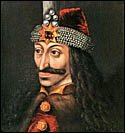
redoubtable - adj - Arousing fear or awe; formidable; worthy of respect or honor.
Like this character here. Vlad Tepes (Tee-pish, 1431-1476), also known as Vlad the Impaler (don't ask), was Bram Stoker's inspiration for the character Dracula.
acrid
acrid - adj - unpleasantly sharp, pungent or bitter to the taste or smell; caustic in language or tone
dogged
dogged - adj. - marked by stubborn determination; obstinate
I realize that this doesn't have a whole lot to do with my word, but when I opened my backdoor to go outside last night...I found a cute little dog on my back porch! It was so exciting! I returned her to our new neighbors soon after finding her but it was fun to play with her for a little bit.
I realize that this doesn't have a whole lot to do with my word, but when I opened my backdoor to go outside last night...I found a cute little dog on my back porch! It was so exciting! I returned her to our new neighbors soon after finding her but it was fun to play with her for a little bit.
Tuesday, August 08, 2006
transducer
transducer - noun - a substance or device, such as a piezoelectric crystal, microphone or photoelectric cell that converts input energy of one form into output energy of another.
abate
abate - v. - to put an end to, nullify; to reduce in degree or intensity, moderate; to reduce in value or amount; omit; deprive
Monday, August 07, 2006
ostracon
ostracon - noun - An inscribed potsherd.
The greeks used this tool to get rid of politicians. It was actually quite a painful process. The assembly (read: the citizens) would enscribe the name of the politician they wanted out of office on a piece of pottery and drop it in a bowl in the senate. When the shards of pottery were counted, if the appropriate number was met, the politician was banished from Athens for 10 years.
-- source: History channel, wikipedia
The greeks used this tool to get rid of politicians. It was actually quite a painful process. The assembly (read: the citizens) would enscribe the name of the politician they wanted out of office on a piece of pottery and drop it in a bowl in the senate. When the shards of pottery were counted, if the appropriate number was met, the politician was banished from Athens for 10 years.
-- source: History channel, wikipedia
redolent
redolent - adj. - exuding fragrance, aromatic; full of a specified fragrance, scented
Happy 2 year Anniversary to Word of the Day!
Happy 2 year Anniversary to Word of the Day!
Friday, August 04, 2006
pantheon
pantheon - noun - a circular temple in Rome, completed in 27 B.C. and dedicated to all the gods; a group of persons most highly regarded for contributions to a field or endeavor.
forlorn
forlorn - adj. - bereft, forsaken; being in poor condition, miserable, wretched; nearly hopeless
"...the horn sounds so forlorn..." Isn't that some sort of Christmas song? I've never heard it except for on You've Got Mail.
"...the horn sounds so forlorn..." Isn't that some sort of Christmas song? I've never heard it except for on You've Got Mail.
blintz
blintz - n - A thin pancake folded around a filling and fried or baked.
This is a very New Yorkish word. The fillings I mostly saw advertised were cheese, potato, and blueberry.
This is a very New Yorkish word. The fillings I mostly saw advertised were cheese, potato, and blueberry.
Thursday, August 03, 2006
repetition - n - the act or process or an instance of repeating or being repeated...
repitition - noun - the act or process or an instance of repeating or being repeated; a recitation or recital, especially of prepared or memorized material
repitition - noun - the act or process or an instance of repeating or being repeated; a recitation or recital, especially of prepared or memorized material
repitition - noun - the act or process or an instance of repeating or being repeated; a recitation or recital, especially of prepared or memorized material
repitition - noun - the act or process or an instance of repeating or being repeated; a recitation or recital, especially of prepared or memorized material
repitition - noun - the act or process or an instance of repeating or being repeated; a recitation or recital, especially of prepared or memorized material
repitition - noun - the act or process or an instance of repeating or being repeated; a recitation or recital, especially of prepared or memorized material
repitition - noun - the act or process or an instance of repeating or being repeated; a recitation or recital, especially of prepared or memorized material
repitition - noun - the act or process or an instance of repeating or being repeated; a recitation or recital, especially of prepared or memorized material
repitition - noun - the act or process or an instance of repeating or being repeated; a recitation or recital, especially of prepared or memorized material
commensurate
commensurate - adj - Of the same size, extent, or duration as another; Corresponding in size or degree; proportionate; Measurable by a common standard.
I'm surprised this one hasn't been used already. I believe we could keep WoD going for two centuries if need be.
I'm surprised this one hasn't been used already. I believe we could keep WoD going for two centuries if need be.
mouse-potato
mouse-potato - n. - someone who spends an inordinate amount of time using a computer
This is great...absolutely great! How come I can't ever come up with these things? It's going to be a while before another word can top this one (in my opinion, anyway).
This is great...absolutely great! How come I can't ever come up with these things? It's going to be a while before another word can top this one (in my opinion, anyway).
Wednesday, August 02, 2006
tutelary
tutelary - adj - having the guardianship or charge of protecting a person or thing; guardian; protecting
I always thought it would be cool to be in the SecretService and protect the President or other foreign dignitaries. I just never had that particular opportunity arise. However, during Operation Iraqi Freedom, I did serve on a protective service detail for the admiral in charge of the port the rest of my unit was protecting. It was, from my perspective, quite an enjoyable experience.
I always thought it would be cool to be in the SecretService and protect the President or other foreign dignitaries. I just never had that particular opportunity arise. However, during Operation Iraqi Freedom, I did serve on a protective service detail for the admiral in charge of the port the rest of my unit was protecting. It was, from my perspective, quite an enjoyable experience.
doleful
doleful - adj. - causing grief or affliction; full of grief, cheerless; expressing grief, sad
Tuesday, August 01, 2006
arcane
arcane - adj - understood or known by only a few
I was sure this word had already been used. However, since it's not, I'll use it.
I was sure this word had already been used. However, since it's not, I'll use it.
impinge
My apologies for being late on yesterday's word. I went ahead and posted it with yesterday's date to keep our archiving straight.
And now for today's word:
impinge - v. - to strike or dash especially with a sharp collision
BTW...we decided to put just the word in the subject line, right?
And now for today's word:
impinge - v. - to strike or dash especially with a sharp collision
BTW...we decided to put just the word in the subject line, right?
albeit
albeit - conj - Although; even though; notwithstanding.
This one may be slightly old-fashioned.
And now I hope you will indulge me as I wander off on a tangent. Spoiler Warning: If you haven't read Bram Stoker's novel Dracula, I'm about to give away an early incident in the novel.
Shortly after Count Dracula moves to London, Lucy Westenra starts losing blood at an alarming rate. Dr. Seward calls Dr. Abraham Van Helsing in as a consultant, and he draws the same conclusion as the reader will, i.e., that Lucy has fallen victim to a vampire. Unfortunately, Lucy is too far gone and dies shortly after Van Helsing's arrival. After Lucy's funeral, there are reports in the papers of children having seen a bloofer lady. I have been plagued for decades wondering what exactly is a "bloofer" lady? Clearly, the lady in question is Lucy, who is now a vampire preying on little children, but what makes her a "bloofer" lady? I finally found the answer after consulting an annotated edition of the novel. "Bloofer" is the way English children pronounced "beautiful," much the same way American children call injuries "booboos." Now I know, and so do you.
This one may be slightly old-fashioned.
And now I hope you will indulge me as I wander off on a tangent. Spoiler Warning: If you haven't read Bram Stoker's novel Dracula, I'm about to give away an early incident in the novel.
Shortly after Count Dracula moves to London, Lucy Westenra starts losing blood at an alarming rate. Dr. Seward calls Dr. Abraham Van Helsing in as a consultant, and he draws the same conclusion as the reader will, i.e., that Lucy has fallen victim to a vampire. Unfortunately, Lucy is too far gone and dies shortly after Van Helsing's arrival. After Lucy's funeral, there are reports in the papers of children having seen a bloofer lady. I have been plagued for decades wondering what exactly is a "bloofer" lady? Clearly, the lady in question is Lucy, who is now a vampire preying on little children, but what makes her a "bloofer" lady? I finally found the answer after consulting an annotated edition of the novel. "Bloofer" is the way English children pronounced "beautiful," much the same way American children call injuries "booboos." Now I know, and so do you.
Monday, July 31, 2006
contretemps - noun - an inopportune situation or event; a hitch
My first entry here. I guess I'll get on the bandwagon. Don't forget to keep your spreadsheets up-to-date so you don't submit duplicates, or todays word will apply to you.
rebarbative
rebarbative - adj - Tending to irritate; repellant.
I ran across this one while browsing through some back issues of The New Criterion. The reference was to Humanities as taught in the modern American university.
http://www.newcriterion.com/
I ran across this one while browsing through some back issues of The New Criterion. The reference was to Humanities as taught in the modern American university.
http://www.newcriterion.com/
Friday, July 28, 2006
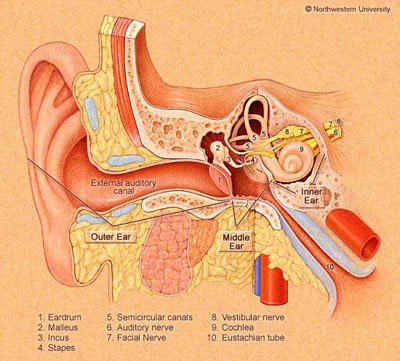
tinnitus
tinnitus - n. - a sensation of noise (as a ringing or roaring) that is caused by a bodily condition (as a disturbance of the auditory nerve or wax in the ear) and typically is of the subjective form which can only be heard by the one affected
Phew! That was a long one. It's interesting that they added on the last part of the definition like tinnitus is some sort of theory or proposed condition that no one can be sure of. If it's so questionable, then why does it have its own definition?
Check out how far up in the ear the auditory nerve is (click to see bigger):

Phew! That was a long one. It's interesting that they added on the last part of the definition like tinnitus is some sort of theory or proposed condition that no one can be sure of. If it's so questionable, then why does it have its own definition?
Check out how far up in the ear the auditory nerve is (click to see bigger):
toilet
toilet - n - The act or process of dressing or grooming oneself.
This one has fallen out of favor for obvious reasons. I almost hate to use it.
You'll also see 'toilette' (pronounced twa-let). I'll bet even money that you've both run across the word used in this context, most likely when reading an 18th or 19th century novel. You might even come across it browsing through an art gallery or a book of reproductions. Below we have the fourth in William Hogarth's series Marriage A La Mode; the title of this piece is The Toilette. As you can see, the newly minted Lady Squanderfield enjoys a little company while she gets herself spruced up for the day.
http://www.nationalgallery.org.uk/cgi-bin/WebObjects.dll/CollectionPublisher.woa/wa/largeImage?workNumber=NG116&collectionPublisherSection=work
This one has fallen out of favor for obvious reasons. I almost hate to use it.
You'll also see 'toilette' (pronounced twa-let). I'll bet even money that you've both run across the word used in this context, most likely when reading an 18th or 19th century novel. You might even come across it browsing through an art gallery or a book of reproductions. Below we have the fourth in William Hogarth's series Marriage A La Mode; the title of this piece is The Toilette. As you can see, the newly minted Lady Squanderfield enjoys a little company while she gets herself spruced up for the day.
http://www.nationalgallery.org.uk/cgi-bin/WebObjects.dll/CollectionPublisher.woa/wa/largeImage?workNumber=NG116&collectionPublisherSection=work
Subscribe to:
Posts (Atom)