Tuesday, September 05, 2006

sentient
sentient - adj. - responsive to or conscious of sense impressions; aware; finely sensitive in perception or feeling
wherefore

wherefore - adv - For what purpose or reason; why; therefore.
There was an old saying among Elizabetans, that "For every why there's a wherefore." Actually, it was probably more of a joke, along the lines of "Ask me no questions and I'll tell you no lies."
One of Shakespeare's most famous soloquies begins with Juliet asking, "O Romeo, Romeo, wherefore art thou, Romeo?" This is usually misinterpreted as Juliet asking where's Romeo. As a matter of fact, the correct reading is that she's asking why he's named Romeo, what difference would it make if he were named something else. The obvious "hidden" meaning, is that he's a Montague and she's a Capulet, and both families have a long-standing feud. She goes on to ask "What's in a name?" and observes that a rose by any other name would smell as sweet.
Romeo and Juliet was a huge popular success when first performed, and continues to be successful both as pastiche (West Side Story), faithful rendition on film (from Franco Zefirelli), and in a new setting, again on film (with Leonardo DiCaprio and Clare Danes in the title roles).
My own opinion is that Romeo and Juliet is minor Shakespeare, but easy enough to make a good starting poin for those new to his plays.
Friday, September 01, 2006
cupola
cupola - noun - a rounded vault resting on a usually circular base and forming a roof or a ceiling; a small structure built on top of a roof; a vertical cylindrical furnace for melting iron in the foundry that has tuyeres and tapping spouts near the bottom; a raised observation post in the roof of a railroad caboose.
Lots of definitions for this word. We tend to think of this structure as the dome on top of a building. Like the one recently added to our own state capital building. However, this is and interesting structure. The most common form for this structure was originally found on top of St Peter's Basilica in Rome. Domes are particulaly cool to look at, and a fun engineering problem. Well, not so much any more, but Leonardo Da Vinci had some issues with them. If I recall correctly, he was the architect who finished the work on St. Peter's after the original suddenly died. The cupola has one major problem with it - gravity. All that weight tends to push the supporting vaults outward causing the whole thing to fall flat. Try this as an example, cut an orange in half and take out the fruit. Leave the empty half orange on the top of the counter and press gently on the top of the orange. Without support under it, the top just caves in. With the other half, press similarly on it. Supported underneath the "top" of the dome, but the force has to go somewhere, so it goes out the sides (typically). It would be bad form to have the cupola come crashing down on the worshipers below, so the solution to the problem was to find a way to confine the supporting vaults. The answer is five very sturdy chains at various points inside the structure to reinforce the vaults and keep them from sliding outward as gravity takes affect on the whole structure.
Lots of definitions for this word. We tend to think of this structure as the dome on top of a building. Like the one recently added to our own state capital building. However, this is and interesting structure. The most common form for this structure was originally found on top of St Peter's Basilica in Rome. Domes are particulaly cool to look at, and a fun engineering problem. Well, not so much any more, but Leonardo Da Vinci had some issues with them. If I recall correctly, he was the architect who finished the work on St. Peter's after the original suddenly died. The cupola has one major problem with it - gravity. All that weight tends to push the supporting vaults outward causing the whole thing to fall flat. Try this as an example, cut an orange in half and take out the fruit. Leave the empty half orange on the top of the counter and press gently on the top of the orange. Without support under it, the top just caves in. With the other half, press similarly on it. Supported underneath the "top" of the dome, but the force has to go somewhere, so it goes out the sides (typically). It would be bad form to have the cupola come crashing down on the worshipers below, so the solution to the problem was to find a way to confine the supporting vaults. The answer is five very sturdy chains at various points inside the structure to reinforce the vaults and keep them from sliding outward as gravity takes affect on the whole structure.
irascible
irascible - adj. - marked by hot temper and easily provoked anger
It's funny that y'all were talking about using blogs as a response to reading as opposed to what we're doing because we're all defining words we find in our reading anyway.
Another wonderful word from J.K. Rowling.
It's funny that y'all were talking about using blogs as a response to reading as opposed to what we're doing because we're all defining words we find in our reading anyway.
Another wonderful word from J.K. Rowling.
excrement
excrement - n - [obsolete] Matter extruded from the body such as hair and nails.
Here's a Shakespearean word that can create problems for a modern reader. When Armado in Love's Labor's Lost talks about handling excrement, he's referring to his mustache.
Here's a Shakespearean word that can create problems for a modern reader. When Armado in Love's Labor's Lost talks about handling excrement, he's referring to his mustache.
Thursday, August 31, 2006
clerestory
clerestory - noun - an outside wall of a room or building that rises above an adjoining roof and contains windows
Probably one of the more important pieces of architecture, thinking primarily of ancient churches, palaces, or other large governemnt buildings is the clerestory (the clear story). This is how a building of vast dimensions was light. Candles just couldn't handle the load. Imagine being in Notre Dame or the Malmesbury Abbey and trying to read your sermon notes, or, if you happened to be lucky enough to be in the orchestra, your music. Buildings without windows are dark buildings indeed and it takes a lot of candles to even raise the light level enough to be tolerable to ambulate sans tripping. Windows and daylight are a much better solution. Then the problem is: how to get light in without blinding the people. The answer: put the windows way up high so the light comes down to the floor of the building without distracting people with a nice view to the outdoors and not having the sunlight full in their eyes as they peer toward the altar.
Probably one of the more important pieces of architecture, thinking primarily of ancient churches, palaces, or other large governemnt buildings is the clerestory (the clear story). This is how a building of vast dimensions was light. Candles just couldn't handle the load. Imagine being in Notre Dame or the Malmesbury Abbey and trying to read your sermon notes, or, if you happened to be lucky enough to be in the orchestra, your music. Buildings without windows are dark buildings indeed and it takes a lot of candles to even raise the light level enough to be tolerable to ambulate sans tripping. Windows and daylight are a much better solution. Then the problem is: how to get light in without blinding the people. The answer: put the windows way up high so the light comes down to the floor of the building without distracting people with a nice view to the outdoors and not having the sunlight full in their eyes as they peer toward the altar.
ambulatory
ambulatory - adj. - moving from place to place, itinerant; able to walk about and not bedridden
It seems like this word would mean the opposite. Maybe I need to do some research and learn suffixes such as "ory." Perhaps if I knew the meaning of "ory" I would not think the definition as backwards. If only people would wisen up and ask me for my opinion before making such importance decisions then things would be so much simpler (and no, I'm not really that arrogant).
It seems like this word would mean the opposite. Maybe I need to do some research and learn suffixes such as "ory." Perhaps if I knew the meaning of "ory" I would not think the definition as backwards. If only people would wisen up and ask me for my opinion before making such importance decisions then things would be so much simpler (and no, I'm not really that arrogant).
churl
churl - n - A rude, boorish, or surly person; a peasant, rustic.
This one shows up in Shakespeare (in the second sense), and it's a useful word to have in your vocabulary.
This one shows up in Shakespeare (in the second sense), and it's a useful word to have in your vocabulary.
Wednesday, August 30, 2006
nave
nave - noun - the hub of a wheel; the main part of the interior of a church, especially the long narrow central hall in the cruciform church that rises higher than the aisles flanking it to form a celestory.
This is the central approach to the altar and is meant to inspire both a feeling of smallness (the ceilings are usually extremely high) and a sense of wonder at the same time. From the entrance of the nave, the altar is usually in plain sight. The nave was the place reserved for the commoners, which, in some way, explains the colloquial use of the word to describe a low-born or unsophisticated person, usually male and usually young (a boy).
This is the central approach to the altar and is meant to inspire both a feeling of smallness (the ceilings are usually extremely high) and a sense of wonder at the same time. From the entrance of the nave, the altar is usually in plain sight. The nave was the place reserved for the commoners, which, in some way, explains the colloquial use of the word to describe a low-born or unsophisticated person, usually male and usually young (a boy).
gramercy
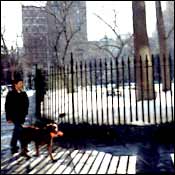
gramercy - interj - Used as an expression of surprise or strong emotion; Thanks (from French grand merci, "great thanks").
In every instance I've seen where Shakespeare uses the word, "Thanks" is meant.
The illustration shows part of Manhatten's pricy Gramercy Park neighborhood.
Tuesday, August 29, 2006
transept
transept - noun - the part of a cruciform church that crosses at right angles to the greatest length between the nave and the apse or choir.
This is usually the north and south portion of the church, as the altar usually lies in the east. The arms of the transept often contain separate chapels . The part of the transept the directly intersects the main aisle is called the crossing, for obvious reasons.
This is usually the north and south portion of the church, as the altar usually lies in the east. The arms of the transept often contain separate chapels . The part of the transept the directly intersects the main aisle is called the crossing, for obvious reasons.
quarto
quarto - n - A book size of 9.5 x 12 inches, determined by folding printed sheets twice to form four leaves or eight pages.
At least 18 of Shakespeare's plays were published in quarto editions during his lifetime. He played no role in their preparation, and he never saw a penny in royalties, which seems incredible to those who live in a time when Stephen King, Dan Brown, and John Gresham could live lives of luxury on their royalties.
The folios create a problem for Shakespeare scholars; in fact, they're probably the main reason there are Shakespeare scholars in the first place. For example, Juliet's balcony soliloquy is available in two quarto editions and the First Folio. All three versions differ slightly, which gives rise to the question, "What did Shakespeare actually write?" Moreover, these plays were scripts for actors, so there's the next question, "What was finally recited on stage?" This is probably yet another never-ending story.
Monday, August 28, 2006
apse
apse - noun - a projecting part of a building (as a church) that is usually semicircular in plan and vaulted.
Apse is NOT a groupe of Apes! Just thought I'd point that out. Anyway, this architecutral structure was a common method of holding up the roof on the end of a building, or, less frequently, both ends. The fetish with round vaulted roof structures was more one of function, the vaults all supported each other, and the roundness created a feeling of being open. They also let in more light more uniformly than the vaults down the length of the aisle of the building.
Apse is NOT a groupe of Apes! Just thought I'd point that out. Anyway, this architecutral structure was a common method of holding up the roof on the end of a building, or, less frequently, both ends. The fetish with round vaulted roof structures was more one of function, the vaults all supported each other, and the roundness created a feeling of being open. They also let in more light more uniformly than the vaults down the length of the aisle of the building.
squib
squib - n. - a short humorous or satiric writing or speech, a short news item; a small firecracker in which the powder burns with a fizz; a small electric or pyrotechnic device used to ignite a charge
Another fun Harry Potter word. I've been surprised when looking things up that she (J.K. Rowling) uses in her books because even though they sound bizarre a lot of her ideas are based on real things. This one, however, is not. A squib in her books is someone born of magical parents but doesn't have any magicial abilities of their own.
Sorry I disappeared for a short while. I'm back.
marry

marry - interj - Short form of "By the Virgin Mary." A mild oath, used as an exclamation of surprise or emphasis.
"Marry, will Kavanagh's Shakespeare obsession never cease?"
I've just finished reading for the second time Shakespeare's most despised play, Titus Andronicus. You remember splatter movies; well TA is a splatter play.
A reasonable guess for Shakespeare's source might be the Greek legend of Tereus, Procne, and Philomela, as recounted in Ovid's (Publius Ovidius Naso) Metamorposes. Tereus took a shine to his wife Procne's sister Philomela, raped Philomela, and, to conceal his crime, cut out her tongue and moved her in with the rest of his slaves. The resourceful Philomela wove a tapestry in which she identified her molester. When Procne saw the tapestry, she murdered her and Tereus's son, Itys, and fed her husband some choice cuts taken from the body. This legend seems almost restrained compared to what Shakespeare did with it. I don't know how much Shakespeare you've read, Natalie, but I'd hold off on this one for a while. (By the way, have either of you seen the movie version from a few years back with Anthony Hopkins as Titus?)
(The illustration reproduces - badly - Peter Paul Rubens's painting of Procne confronting Tereus with their son's head.)
Friday, August 25, 2006
basilica
basilica - noun - an oblong building ending in a semicircular apse used in ancient Rome especially for a court of justice and place of public assembly; an early Christian church building consisting of nave and aisles with clerestory and a large high transept from which an apse projects.
A fascinating structure to say the least. Especially how they were constructed. Creating one of these vaulted buildings was no mean feat in ancient Rome, yet we see them all over the place. They were quite the fad thing to do in ancient architecture.
A fascinating structure to say the least. Especially how they were constructed. Creating one of these vaulted buildings was no mean feat in ancient Rome, yet we see them all over the place. They were quite the fad thing to do in ancient architecture.
folio

folio - n - A large sheet of paper folded once to make two leaves, or four pages, of a book or manuscript; a volume having pages of the largest size (about 15 inches), formerly made from such a sheet.
Many of Shakespeare's plays were published in smaller (quarto) editions during his lifetime, but these were what today would be considered pirated editions. Moreover, Shakespeare did not have any say in these publications, so their quality is erratic to say the least. His complete plays were first published in 1623, in what is now known as the First Folio; others were to follow. These different editions are why there were - and still are - Shakespeare scholars; the burning question continues to be, "What did Shakespeare actually write, and what was finally performed. To give just one example out of many possible, there's a soliloquy in Hamlet that begins, "Oh, that this too too solid flesh would melt. . ." One edition I've seen renders that as, "Oh, that this too too sullied flesh would melt. . ." The story continues, offering yet another proof that Shakespeare was not just for his time, but for the ages.
Thursday, August 24, 2006
Subscribe to:
Posts (Atom)